A San Francisco Walking Tour for Book-Lovers
Good news for all us book nerds: the global literary tourism market is booming. It was recently valued at $2.4 billion and is projected to reach $3.3 billion by 2034.
According to data from Skyscanner, 55% of travelers have booked or considered a trip based on a book they’ve read, while hotel searches using library filters have jumped 70% year over year.
In San Francisco, I found a literary walking tour – an utterly charming little jaunt – that can be completed in a single afternoon.
It’s not a book-cation as such, but a stroll of a few hours that introduces you to some of this beautiful city’s literary treasures. It all takes place in North Beach, which, of course, means the tour is heavily weighted toward the Beat writers of the 1950s.
As well as being San Francisco’s Little Italy – with its wonderful restaurants, bakeries and delis – North Beach was the place in the Fifties where writers and poets such as Jack Kerouac and Allen Ginsberg gathered to shape an independent literary movement.
So let’s start our tour on the corner of Columbus Avenue and Broadway, at a living shrine to Beat literature.
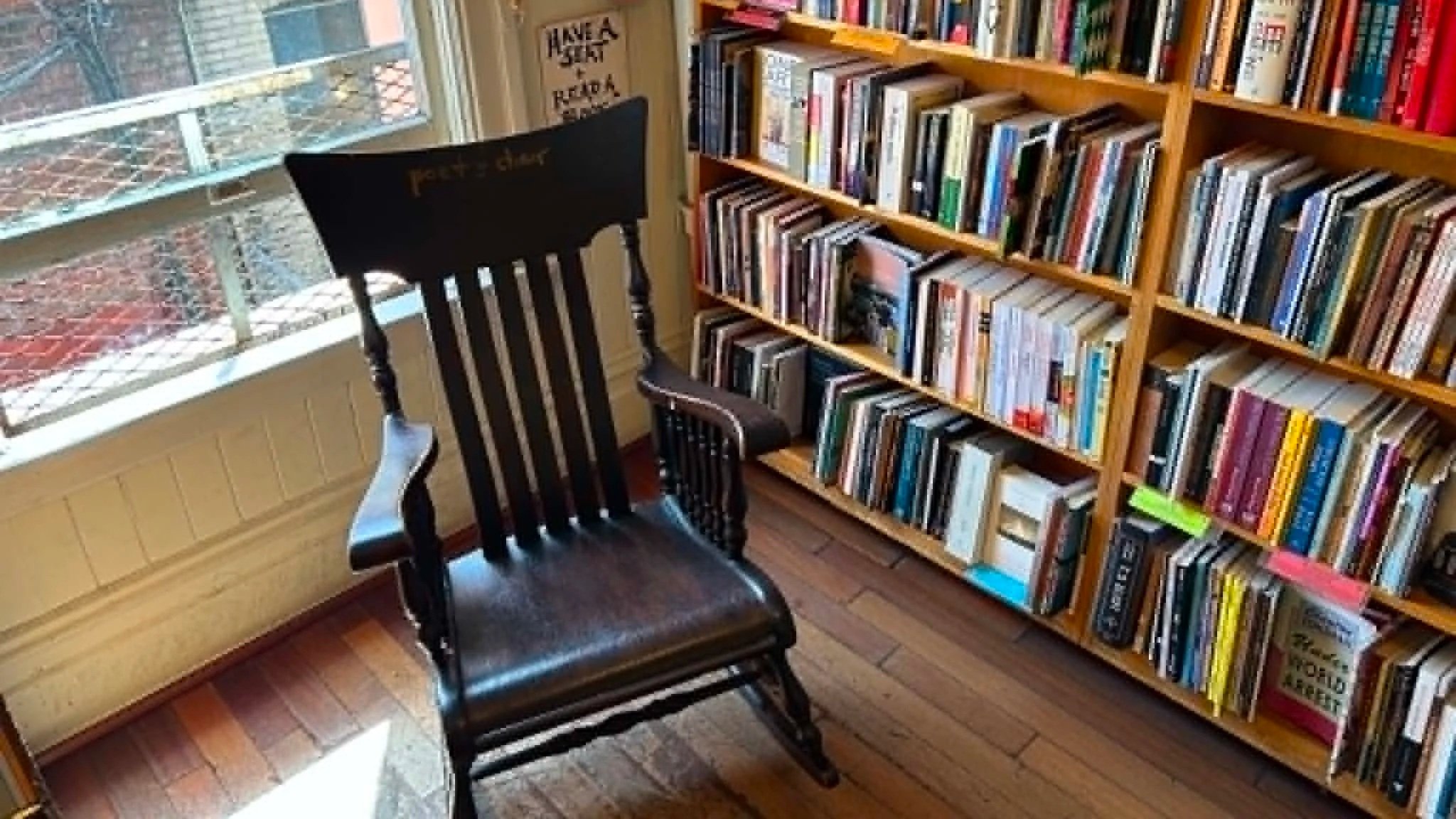
The Poetry Room at City Lights
City Lights Booksellers & Publishers
Founded by Lawrence Ferlinghetti and Peter D. Martin in 1953, City Lights became an intellectual centre of the Beat movement. Ferlinghetti published Allen Ginsberg’s Howl and Other Poems in 1956, resulting in the famous obscenity trial.
Now a San Francisco landmark, City Lights is a warm and welcoming literary bazaar, a warren of rooms where you can find a chair and thumb through one of the books you’ve discovered. The poetry room is a gem.
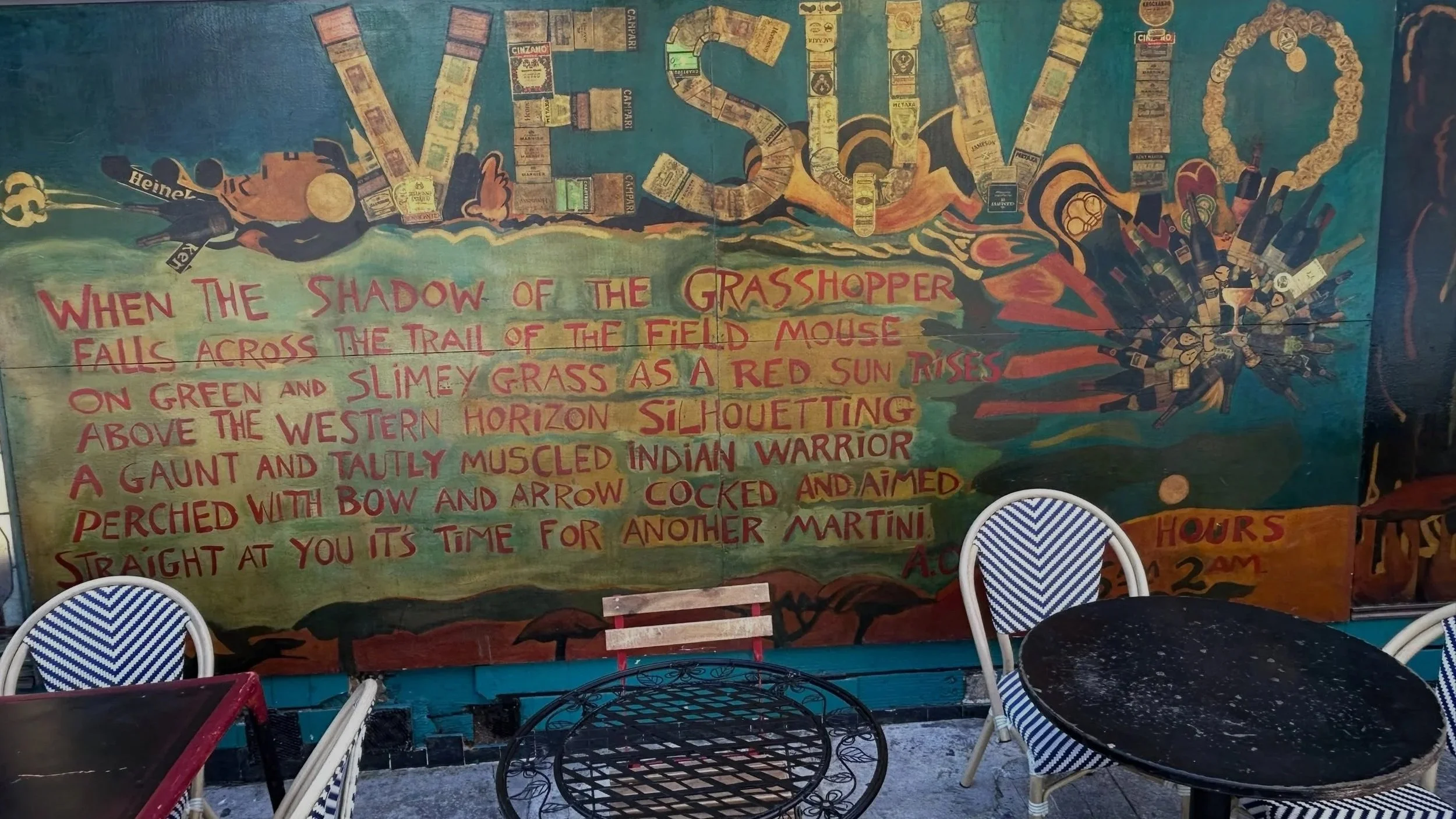
The Vesuvio terrace in Jack Kerouac Alley
Jack Kerouac Alley and the Back Alleys
Stepping outside City Lights, look to your right and you’ll see Jack Kerouac Alley, a quaint pedestrian walkway that is often the site of concerts and other events.
The neighbourhood features several alleyways named for literary figures. If we meander northeast on Columbus Avenue to Washington Square, we’ll find Via Ferlinghetti and Bob Kaufman Alley, just east of the park. Kaufman was an African-American Beat poet who was much admired in the neighbourhood.
These alleyways look like, well, any other alleyways. But they’re clear reminders that this is a city that remembers its artists and renegades.
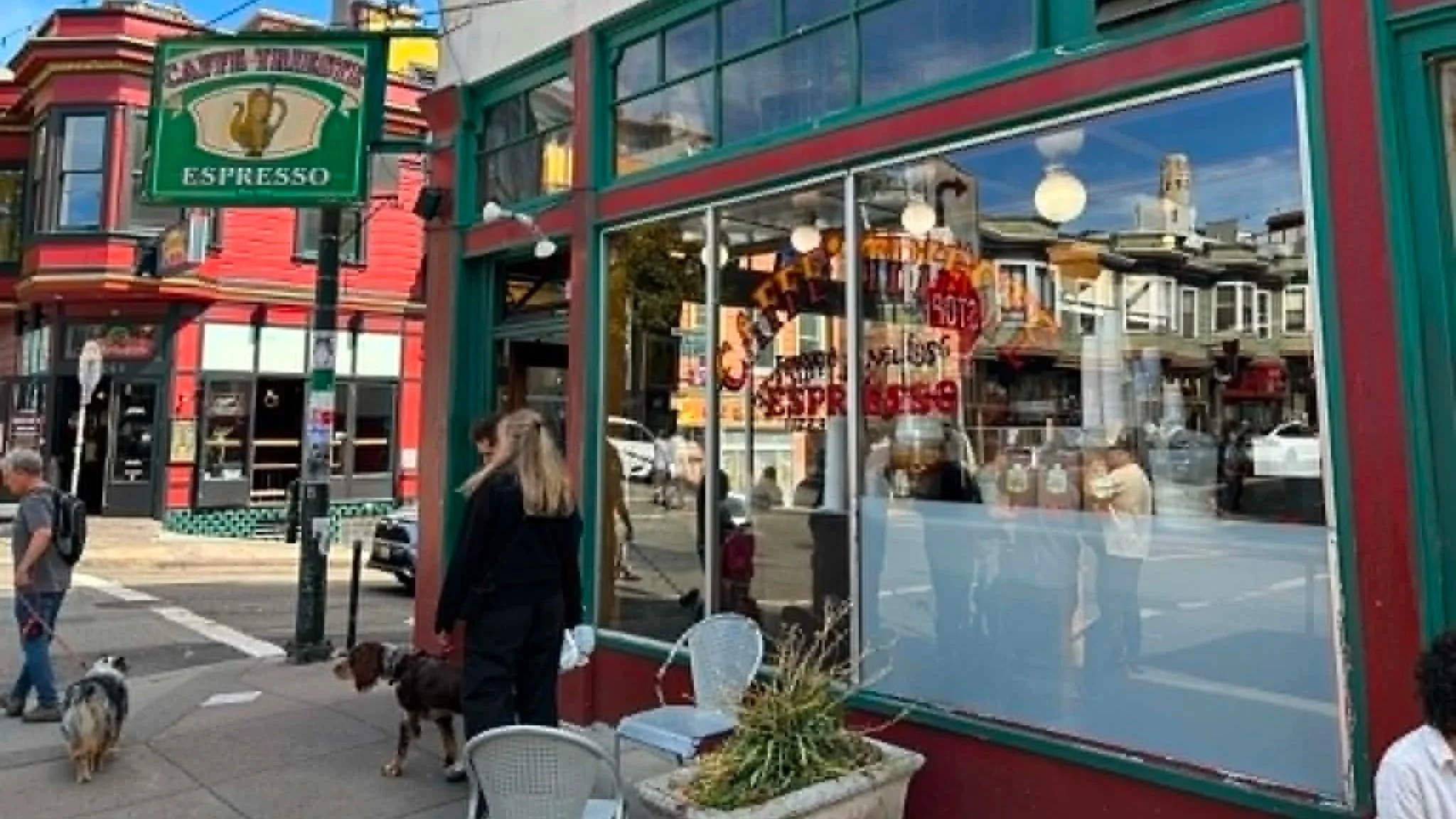
Caffe Triest
Let’s head south on Vallejo Street and pause at the corner of Green Street to visit Caffe Trieste.
Founded in 1956, it became another important gathering spot for the beatniks, often serving as a bridge between the avant-garde artistic crowd and the older Italian community.
At Café Zoetrope (see below), I was told that Francis Ford Coppola used to work on the script for The Godfather Part II at Trieste.
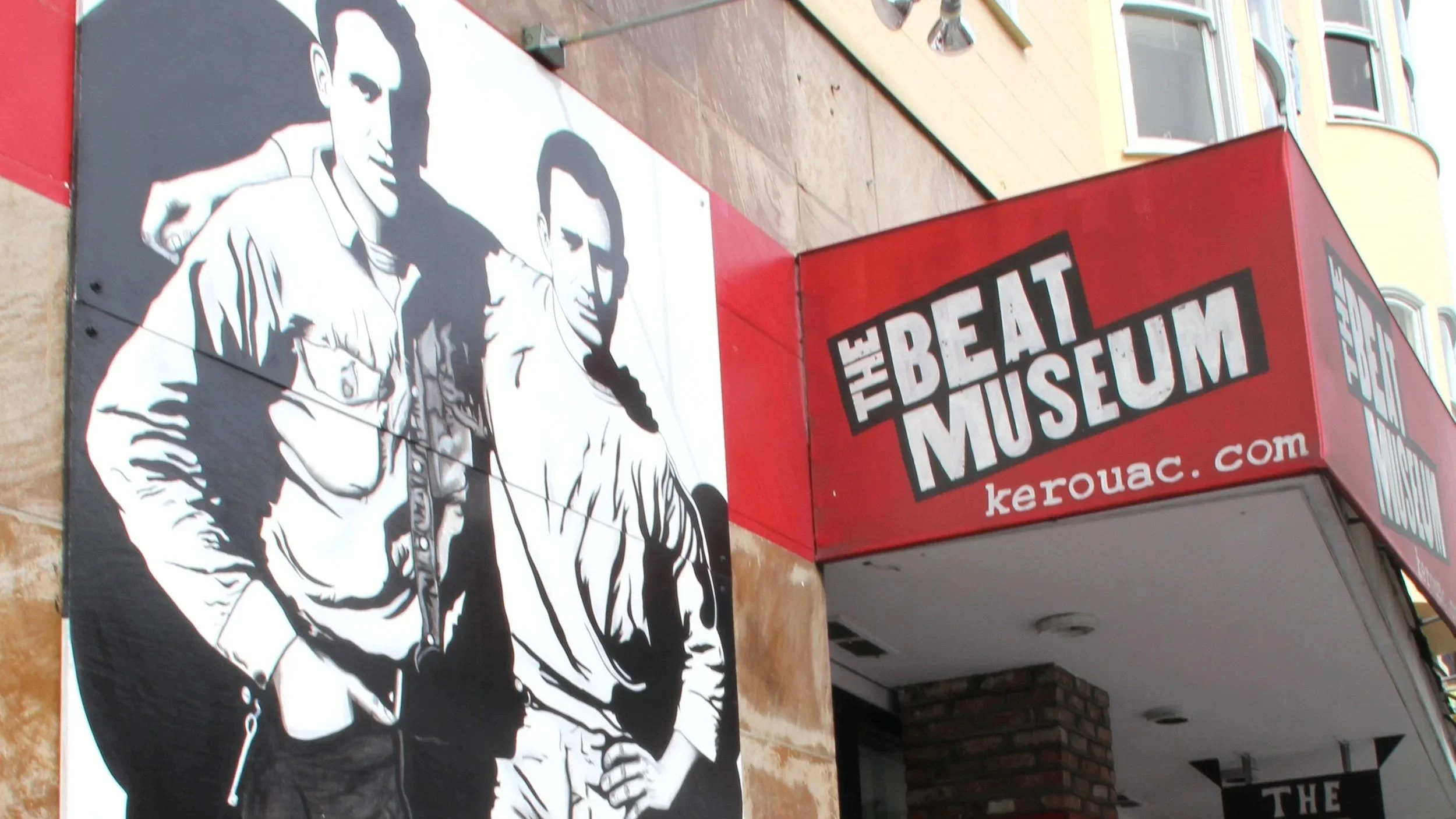
The Beat Museum before the renovations began
The Beat Museum (Temporarily closed)
Return to Columbus heading south, then head east on Broadway to the Beat Museum. Unfortunately, the Beat Museum and its wonderful bookstore were closed for retrofitting when I visited in September 2026.
Luckily, the fantastic people who run the Beat Museum are still open for business at the storied corner of Haight and Ashbury, where they’ve opened the Counterculture Museum.
Given the importance of writers such as Ken Kesey and Tom Wolfe to the neighbourhood, no San Francisco literary trip would be complete without a stop in Haight-Ashbury. Book it into your itinerary.
The Beat Museum itself is fantastic and is due to reopen in mid-2027.
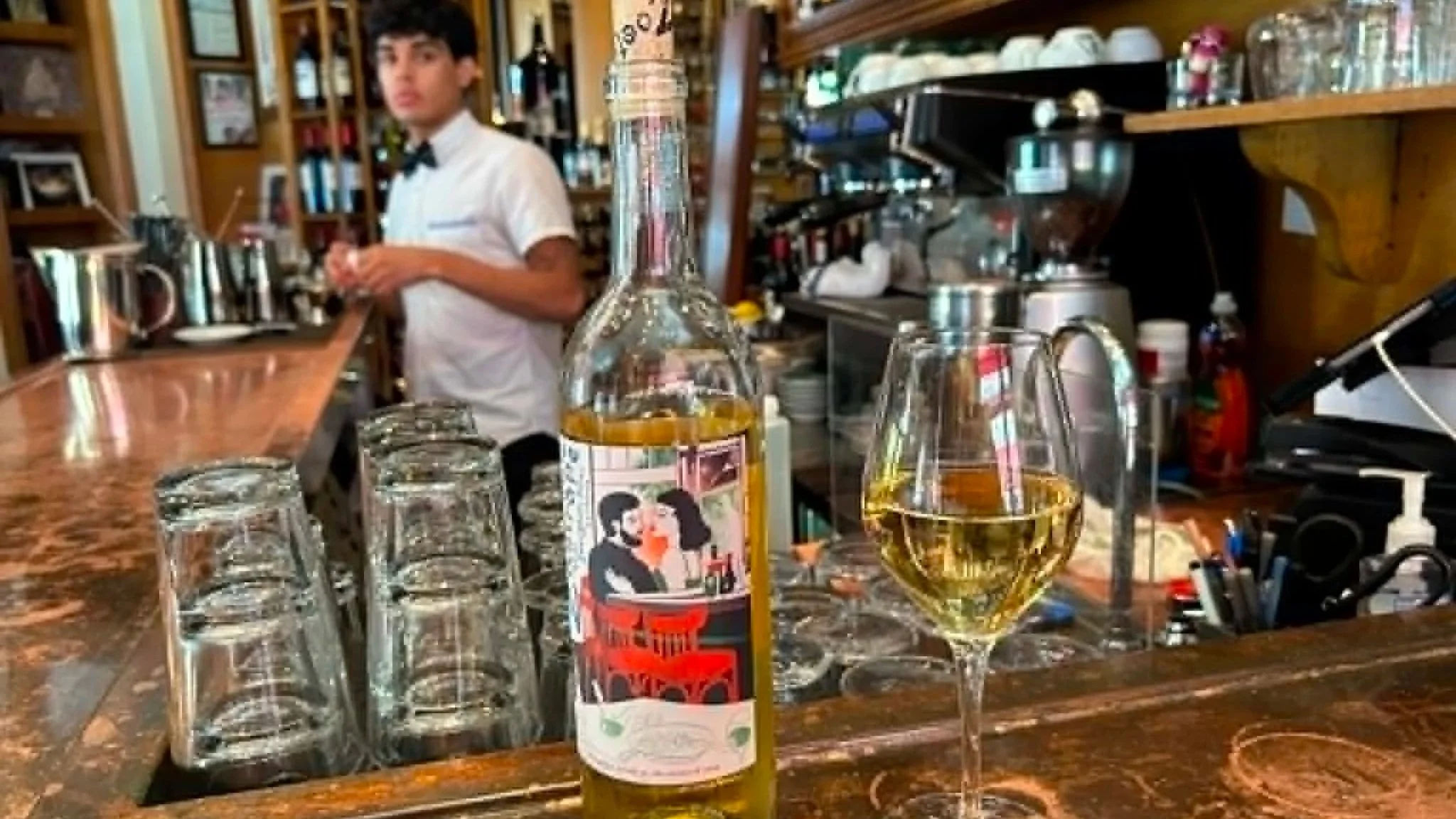
A delightful glass of Coppola white.
Should cinema be classified under the umbrella of literature? Indulge me and answer yes.
As we wander south again on Columbus, you can’t help but notice the copper-green, flatiron-style building known as the Sentinel Building.
Coppola bought the building for $500,000 in 1973 with the proceeds from The Godfather. His American Zoetrope studio has operations throughout the building, and the café on the ground floor is a great stop for film buffs.
Make sure you sample a glass of wine from Coppola’s vineyard north of the city.
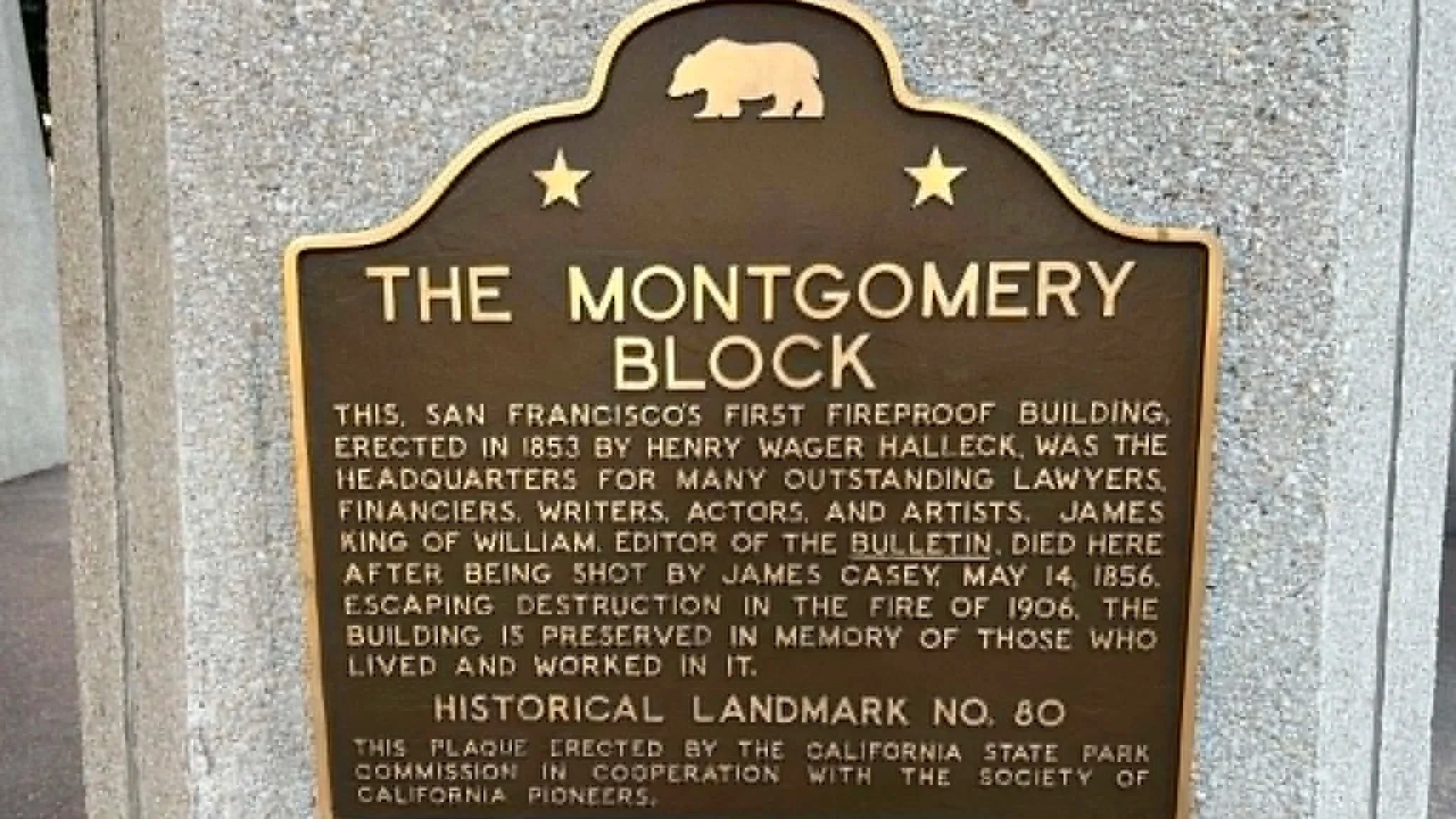
The Site of the Montgomery Block
Behind the Sentinel Building is a rather large reminder that North Beach has long been a Bohemian haunt.
The Transamerica Pyramid stands on the site of what was once a gathering place for artists, writers and other renegades. The Montgomery Block, known to locals as the Monkey Block, stood here from 1853 to 1959. During its long history, its short-term residents included Mark Twain, Robert Louis Stevenson, Ambrose Bierce and Jack London.
All that remains today is a plaque commemorating the building.
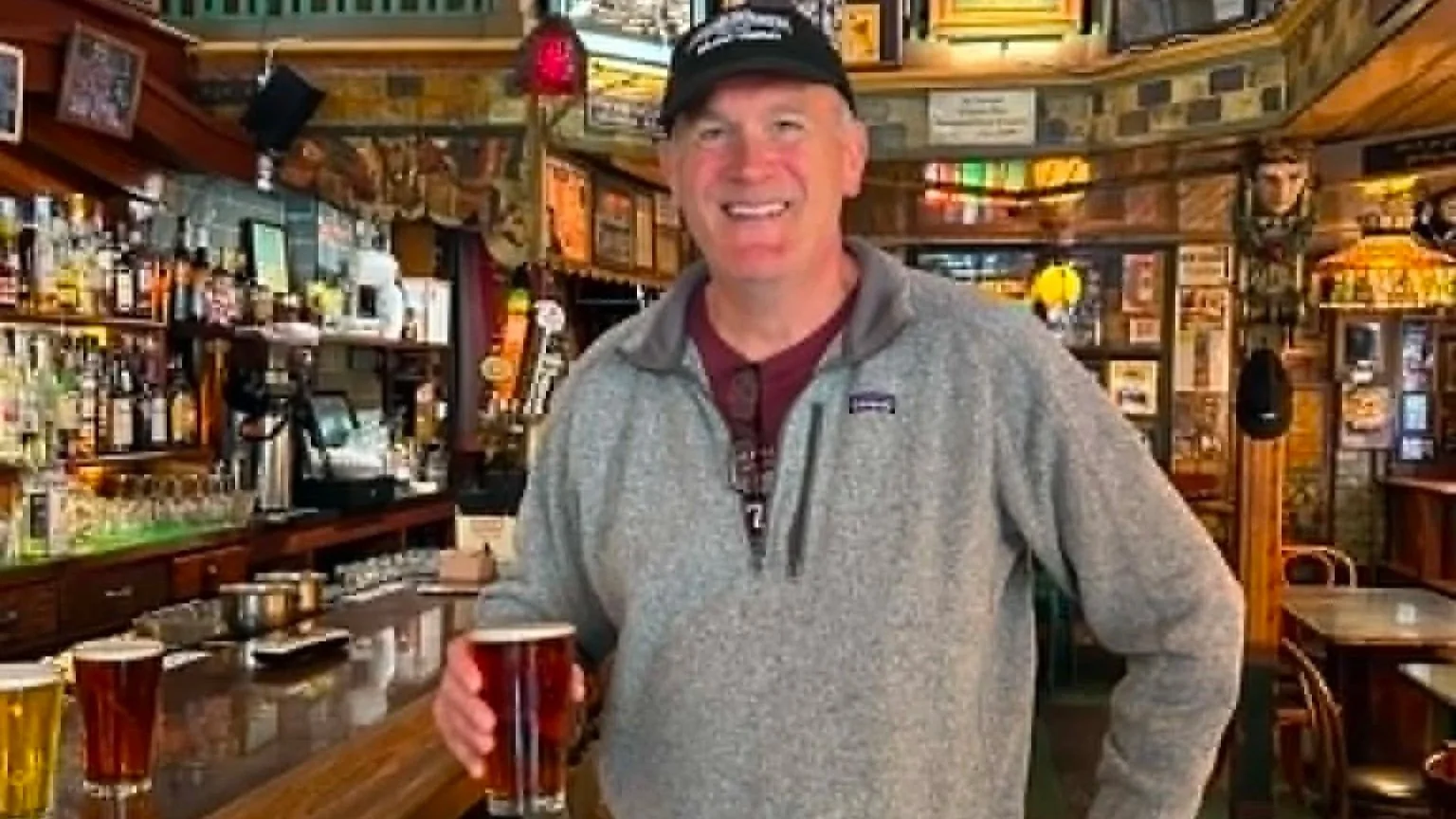
The author in the Vesuvio. Cheers!
If you were going to invent your ideal literary saloon, you’d model it on Vesuvio.
Luckily, someone else did just that in 1948, and thirsty scribes have been propping up its luxuriant bar ever since. Kerouac and Allen Ginsberg are the names most often associated with it, but the list also includes Neal Cassady, Bob Dylan and Dylan Thomas.
There’s no better way to wrap up a North Beach literary tour than with a pint at this landmark.
Of course, there’s one name we haven’t mentioned: Dashiell Hammett, author of The Maltese Falcon, the greatest novel ever set in San Francisco.
Hammett certainly knew North Beach. He staged a shootout in the neighbourhood in “Bodies Piled Up,” one of his Continental Op short stories.
If you’re looking for more landmarks associated with the great noir writer, head down to the Union Square district. There you can visit Burritt Street, where Miles Archer was murdered in The Maltese Falcon, and Hammett’s former residence at 891 Post Street.
* * *
Hi. I’m Peter Moreira and my latest novel is the technothriller Presidio Biotech. I’m also also the author of The Haight Mystery Series — retro mystery novels set in San Francisco in the late 1960s. Go to my home page to join my mailing list and receive a free prequel novella.